
PARAGON FLOORING · ARTICLES
LVP Wear Layer vs. Thickness: What to Compare in Greenville, SC
Published
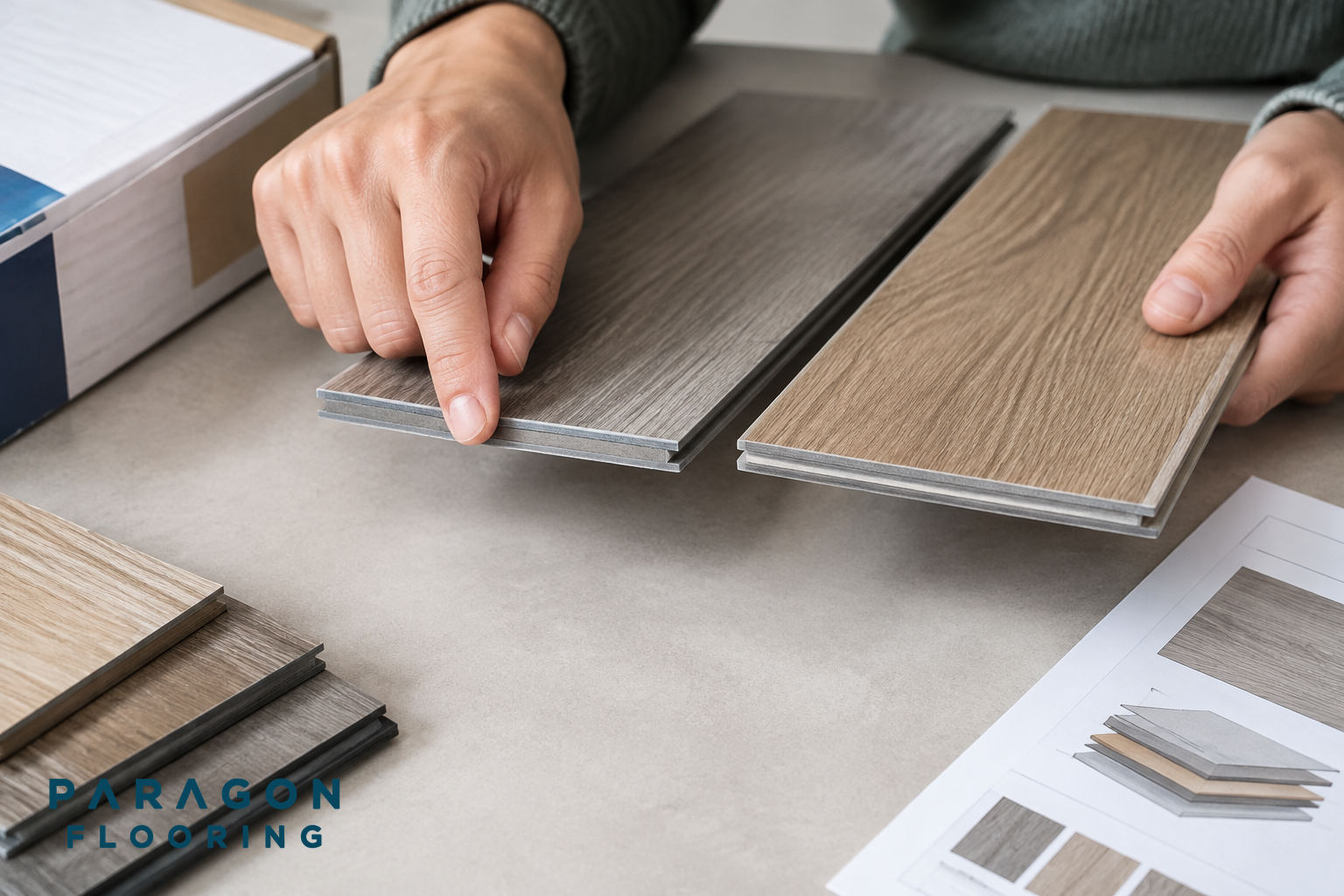
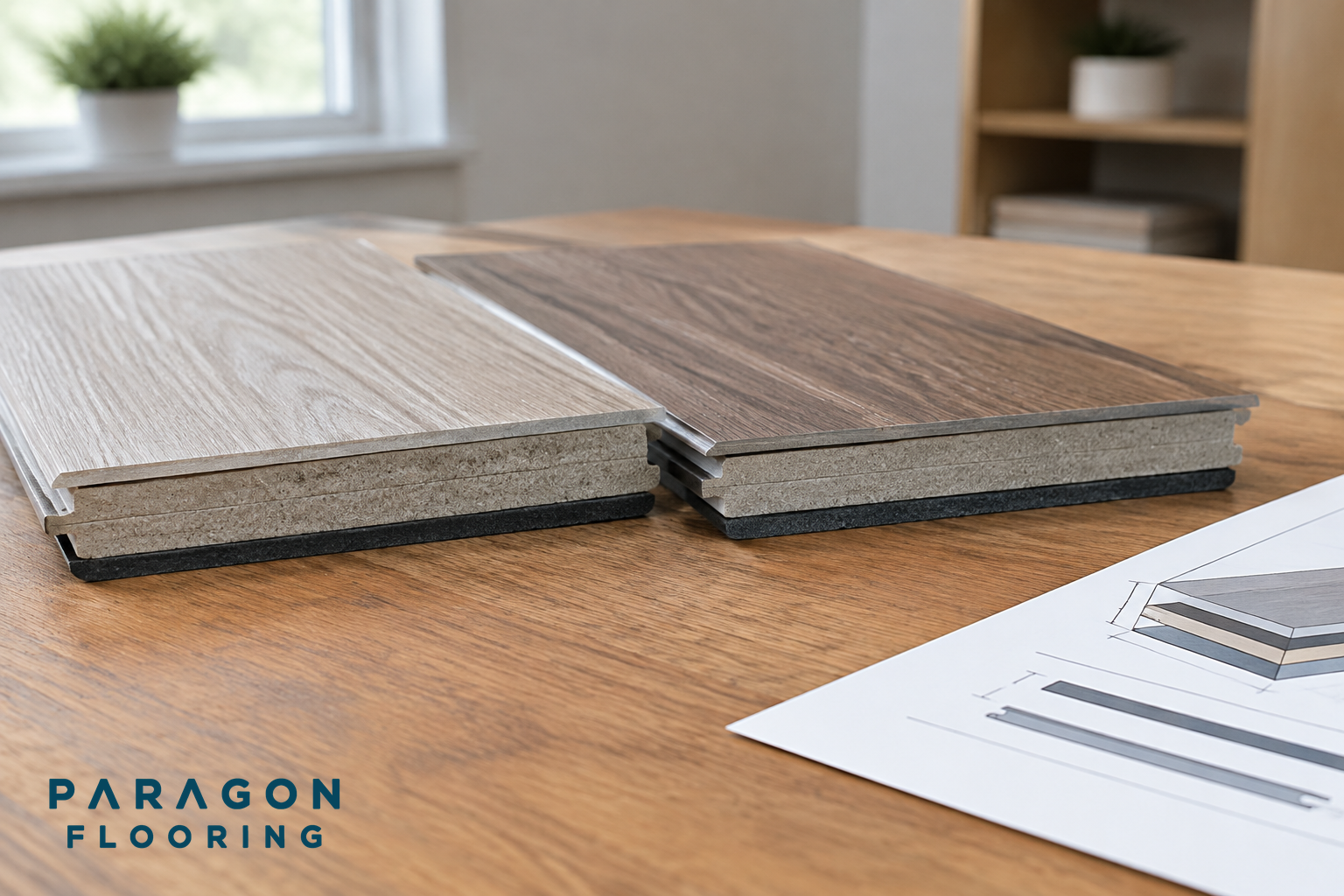
Should you choose vinyl plank by wear layer or overall thickness?
For your Greenville home, compare both, but do not choose luxury vinyl plank flooring, or LVP, by either number alone. Wear-layer thickness describes one part of the surface construction. Overall thickness describes the plank as a whole. Neither figure, by itself, tells you whether a product suits your room, existing floor or installation plan.
Start with the exact product sheets for the samples you like. Paragon Flooring serves Greenville and offers vinyl flooring, material comparison, existing-surface review and preparation planning. Those discussions can connect the specifications on a sample to the room where you intend to use it.
Separate the two measurements
The wear layer is the protective layer above the printed design. Its thickness is a different measurement from the thickness of the complete plank. Compare the labeled wear-layer specification separately from any information about surface finishes or treatments. A wear-layer number alone is not a promise against scratches or other damage.
Overall plank thickness describes the complete product construction. Check whether the listed measurement includes an attached backing or pad. Two samples with different total thicknesses may also differ in construction, backing and installation requirements, so the larger number does not automatically identify the better choice.
Read the units carefully. A wear layer may be listed in mils, while overall thickness may be listed in millimeters. These are different units, not interchangeable labels. If the sheets use different units or leave a measurement unclear, ask for clarification before comparing the numbers.

Compare the same information for each sample
Create a short side-by-side record using the exact product name and model. Record the wear-layer measurement and unit, overall thickness, whether backing is included, intended uses, care instructions and installation method. Mark missing information as a question rather than assuming it matches the other sample.
Next, describe the room: who uses it, whether pets share it, what furniture moves across it and how you expect to clean it. Check each product's documentation against those needs. Look at physical samples beside the finishes you will keep, and compare texture and appearance as well as specifications.
If one sample has a larger wear-layer figure and another has greater overall thickness, there is no automatic winner. First establish whether both are suitable for the intended use. Then compare the remaining differences that matter to your household.
Keep performance claims and preparation separate
Neither thickness figure establishes waterproof performance, scratch resistance or permission to install over an existing floor. Check the manufacturer's stated uses, limitations, care requirements and installation instructions for that exact product. Do not extend a claim about the plank to the entire installed floor without supporting documentation.
Preparation and finished floor height also belong in the decision, but they are not reasons to select a plank from thickness alone. Ask what the selected product requires of the existing surface and how it will meet neighboring floors. For the broader planning discussion, see Paragon Flooring's existing guide: https://paragonflooringsc.com/blog/what-you-need-to-know-about-flooring-installation-south-carolina.html.
Bring your Greenville room details to Paragon Flooring
Bring the exact product sheets, samples and photos of the room and adjoining floors to Paragon Flooring. Explain which flooring will stay, how the room is used and which product claims you want clarified.
For your Greenville property, discuss material suitability, the existing surface, preparation and transitions together. Before ordering or scheduling work, confirm the selected product and written scope, including removal, preparation and finishing details.