
PARAGON FLOORING · ARTICLES
Solid vs. Engineered Hardwood for Your Greenville, SC Home
Published
Solid vs. Engineered Hardwood for Your Greenville, SC Home
For a Greenville home, neither solid nor engineered hardwood is automatically the better choice. Start with the room, the existing floor and subfloor, and the requirements of the specific product. Then compare appearance and future upkeep. A sample can help you choose a finish, but it cannot establish whether that flooring suits your property.
Paragon Flooring serves Greenville and offers hardwood flooring. Its published flooring service page describes reviewing existing surfaces, discussing subfloor preparation and planning transitions. Those are useful starting points when deciding which hardwood construction to explore.
What is the difference between solid and engineered hardwood?
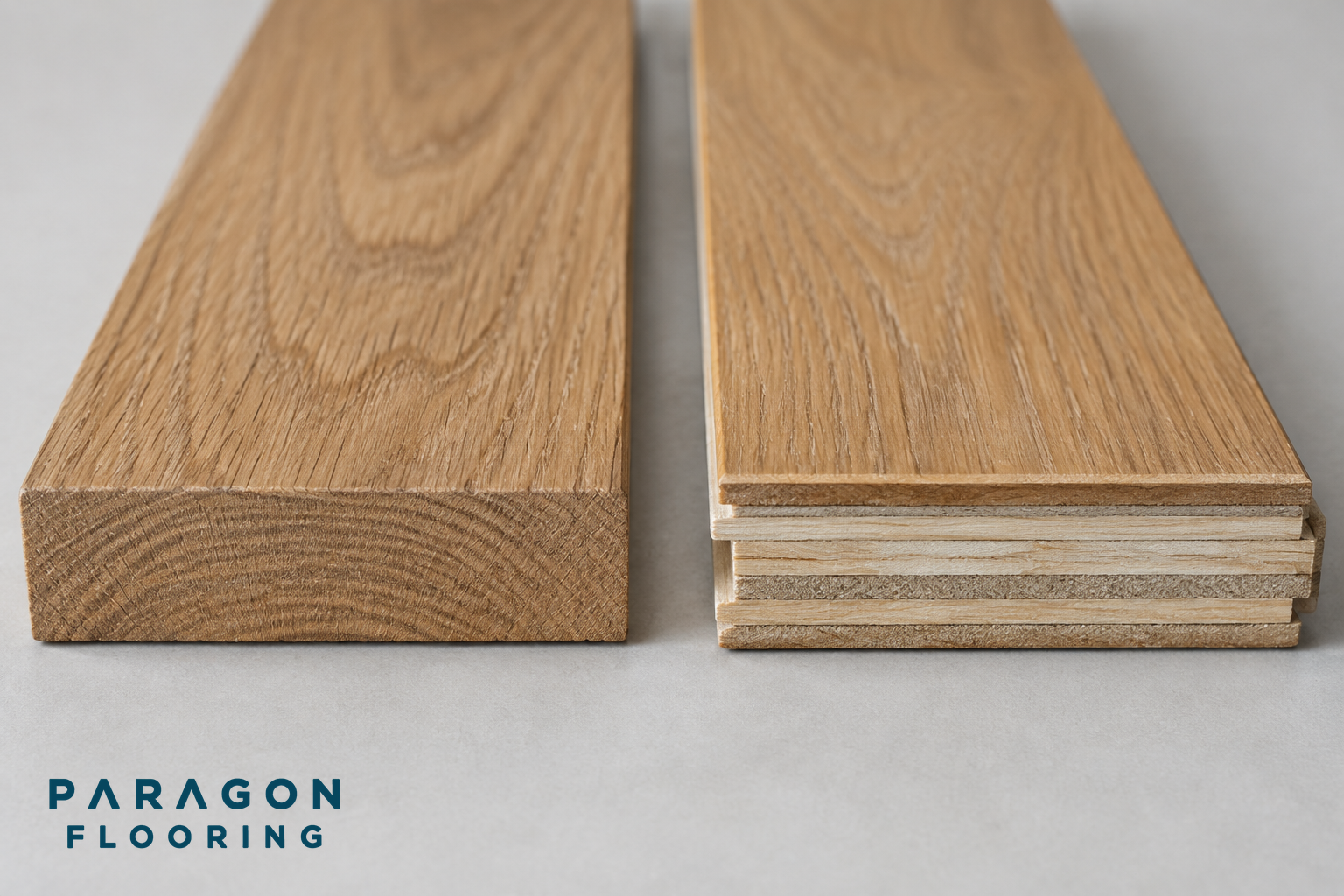
Solid hardwood boards are wood throughout their thickness. Engineered hardwood has a real wood surface over a layered base. Both can provide a wood surface underfoot, but their construction affects which installation methods and locations a particular product permits.
Engineered hardwood is not laminate. When comparing samples, ask for the product description rather than relying on a wood-look finish or a display label. Compare the actual species, surface finish, texture and board dimensions as well as the construction.
Let the existing floor narrow the options
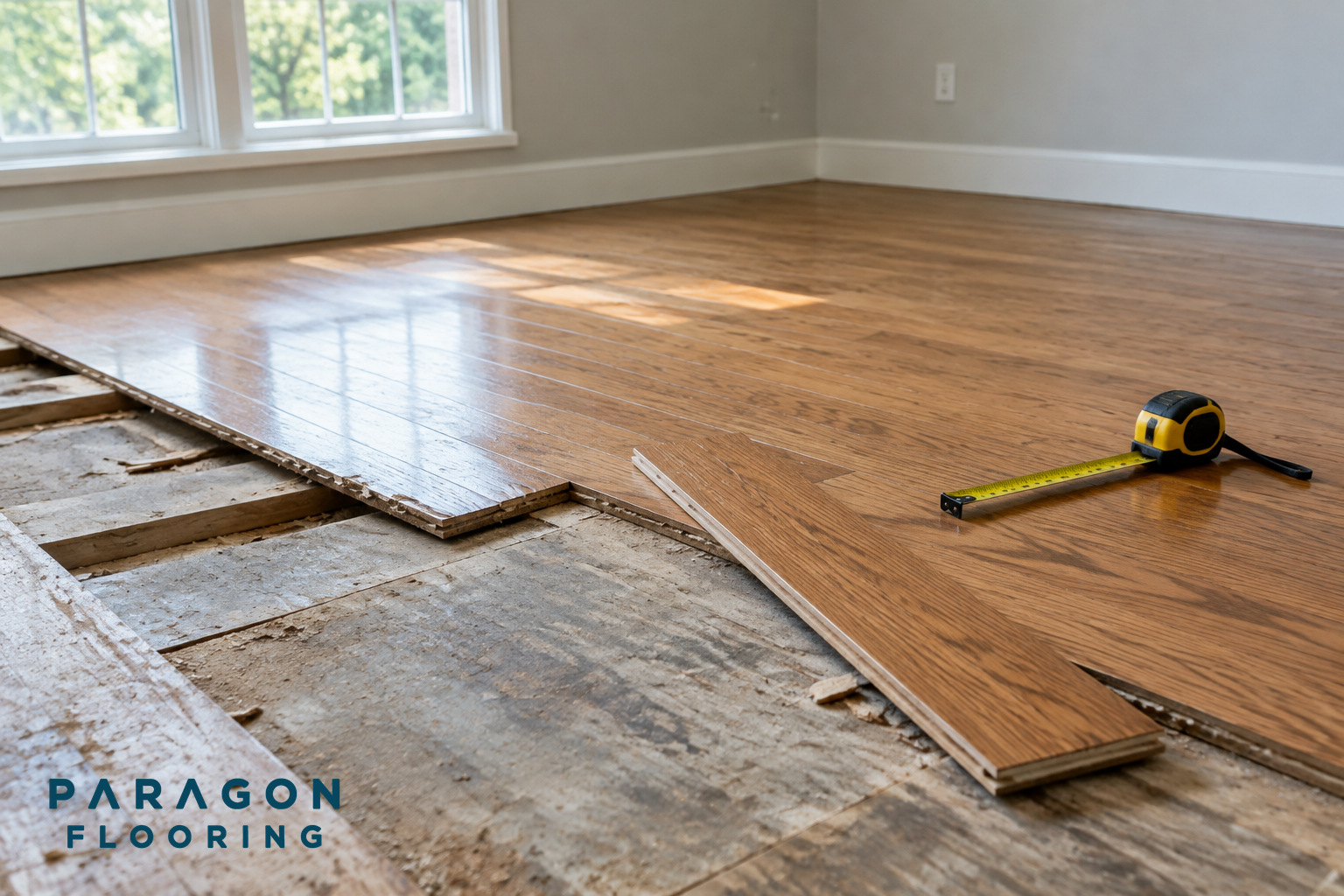
Before settling on either construction, identify what is beneath the current flooring. Ask what needs to be removed, what subfloor will remain and what preparation the selected product requires. Do not assume that a new wood floor can simply cover the old surface.
Installation options are product-dependent. Ask whether the specific boards permit fastening, adhesive installation or a floating method, and whether that method suits the existing foundation. Engineered construction does not mean every product can be installed in every way. Use the manufacturer's installation instructions to guide the decision, rather than a broad rule about hardwood.
Consider room use and moisture without assuming waterproof performance
Describe how the room is used: everyday foot traffic, pets, food preparation and the likelihood of spills. Ask how each shortlisted product should be cleaned and what its care instructions exclude. Neither the word “solid” nor “engineered” establishes that a floor is waterproof.
Any known dampness, leaks or previous moisture concerns should be part of the property discussion before material selection. Ask what checks the chosen product requires and how any unresolved concern would affect the plan. These are general flooring considerations, not claims about conditions unique to Greenville.
Check connections and future refinishing
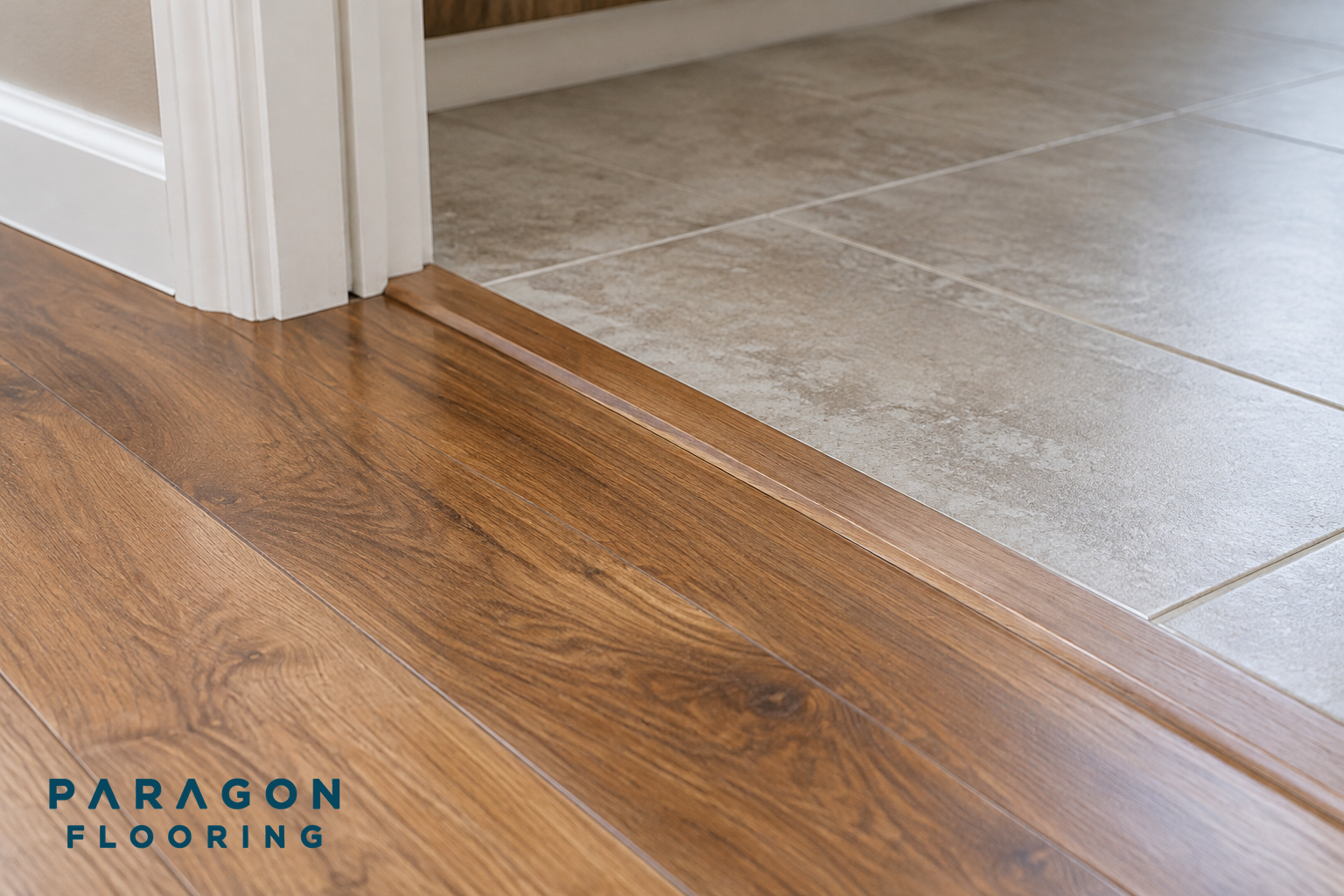
Compare the proposed finished floor height with adjoining tile, carpet and other floors. Include door clearances, thresholds, wall trim and fireplace edges in the discussion. A preferred board may still require connection details that change the scope.
If future refinishing matters, request documented guidance for the exact product. Do not assume every engineered floor can be sanded and refinished. Its wood surface thickness and manufacturer guidance matter. Solid hardwood also should not be treated as having unlimited refinishing potential; the floor's condition and remaining usable material affect future options.
Bring a focused checklist to Paragon Flooring
Bring room photographs, information about the existing floor, samples you like and any known moisture concerns. Ask which shortlisted products suit the room, what preparation is needed, which installation method is permitted and how the new floor will meet neighboring surfaces.
Discuss your Greenville property with Paragon Flooring before ordering materials. Confirm the selected product, removal and preparation, installation method, transitions and finishing details in a written scope. That gives you a more useful basis for choosing than appearance alone.